BPC-157 peptide
Body Protection Compound-157, a pentadecapeptide
A synthetic 15-amino-acid fragment of a protein found in gastric juice. It is one of the most studied peptides in rodent models of tendon, gut and wound repair. There are no published large controlled trials in people, and no regulator has approved it.
Structure
Fifteen residues, rich in proline, with two acidic aspartates near the C-terminus. Select any residue to see what it is.
Evidence at a glance
Where the published research on BPC-157 comes from, by type of study.
Cell studies
Fibroblast, endothelial and tendon cell cultures, looking at migration, growth factor signalling and blood vessel formation.
Animal studies
Mostly rats and mice: tendon and ligament injury, gut lesions, muscle, bone and nerve models.
Human studies
No large randomised controlled trials have been published. Safety and effect in people are unknown.
Research areas
What laboratories have studied BPC-157 for, and in which models. These are research questions, not proven uses.
Tendon and ligament repair
Rat Achilles transectionTendon fibroblast culture- Faster histological healing of transected tendons in rats.
- Increased growth hormone receptor expression in cultured tendon fibroblasts.
- Better outgrowth and survival of tendon cells in vitro.
Gastrointestinal protection
Rodent gastric lesion modelsColitis models- Stable in gastric juice, unusual for a peptide, which first drew interest.
- Reduced lesions in rodent models of ulcers and inflammatory bowel damage.
- Studied for fistula healing in animal models.
Wound healing and blood vessels
Endothelial cell assaysRodent skin wounds- Effects on VEGFR2 and nitric oxide pathways in endothelial cells.
- Faster closure of skin wounds and burns in animal models.
Muscle and bone
Rat muscle crush injurySegmental bone defect- Functional recovery after muscle injury in rats.
- Bone defect healing in rabbit and rat models.
Legal status
BPC-157 is not an approved medicine anywhere we cover. Suppliers may sell it for laboratory research only, and regulators judge that by the whole website, not the label.
United States Not approved
Not FDA-approved. Removed from the Category 2 bulks list on 15 April 2026. In July 2026 an FDA advisory committee narrowly voted to recommend it for the 503A bulks list; the vote is not binding and no rule had been proposed as of 27 October 2026.
United Kingdom Not licensed
No MHRA licence. Sold with medicinal claims it counts as a medicine under the Human Medicines Regulations 2012.
European Union Not authorised
No EMA authorisation. Under Directive 2001/83/EC a substance can be a medicine by function, whatever its label says.
Sport Prohibited
Named by WADA as a non-approved substance, banned in and out of competition.
Lab handling
General good practice for research materials. Follow the supplier's datasheet where it differs.
Storage
Keep the sealed material at −20 °C, dry and away from light. Let the vial reach room temperature before opening to stop condensation.
Solubility
Generally soluble in sterile water or buffer. Add solvent down the vial wall and swirl gently rather than shaking.
Aliquots
Split solutions into single-use aliquots, label with lot number and date, and freeze. Avoid repeated freeze-thaw cycles.
Work out your stock solution
Stock concentration, molarity and dilutions for BPC-157, using MW 1419.53 g/mol.
Before you buy for your lab
Tick each check as you confirm it with the supplier. Do not order until all six are done.
- Vendor claim: every batch is tested by accredited third-party labs at 99%+ purity. We have not yet verified a COA for this product.
- No dosing on product pages, and no FDA warning letter found as of 27 October 2026.
- Why Caution: it does not pass check 4 above. Its shop sells a reconstitution kit with bacteriostatic water and insulin-style syringes, and a multi-dose injection pen described as for "precision dosing". Its blog also makes health and weight-loss claims we do not endorse, it sells GLP-1 research compounds, and it does not verify researchers. We link only to the individual research product page, and we are reviewing suppliers with cleaner catalogues.
Where to buy BPC-157 for research: prices compared
Prices checked 28 October 2026 in US dollars, before discount codes and shipping. Price per mg lets you compare vial sizes. Current discount codes are on our True Peptides vs Validated Peptides comparison.
| Supplier | Vial | Price | Price per mg | Stock | |
|---|---|---|---|---|---|
| True Peptides | 5 mg | $44 | $8.80 | Out of stock | View |
| True Peptides | 10 mg | $59 | $5.90 | In stock | View |
| Validated PeptidesLowest per mg | 10 mg | $39.99 | $4.00 | In stock | View |
- Asks buyers to confirm in-vitro research use before entering the shop, and its affiliate rules ban dosing and human-use content.
- Vendor claim: HPLC and mass-spec testing on every lot, with a lot-matched COA database. We have not yet verified a COA for this product.
- No FDA warning letter found as of 28 October 2026.
- Why Caution: it also sells GLP-1 research compounds, and peptides outside our library such as PT-141 and Melanotan II.
- Shows the current lot's COA on the product page: 99.49% HPLC purity, 10.6 mg net peptide content, lot BPC157-10MG-BA-825 tested 12 Aug 2026. The report comes from an ISO/IEC 17025 accredited lab, but the lab is not named on the page.
- 30-day refund on unopened vials. No FDA warning letter found as of 28 October 2026.
- Why Caution: it sells bacteriostatic water and GLP-1 research compounds, checks only age (21+) rather than research use, and its product descriptions make therapeutic claims we do not endorse.
Questions researchers ask
What is BPC-157?
A synthetic 15-amino-acid fragment of a protein found in gastric juice. It is one of the most studied peptides in rodent models of tendon, gut and wound repair. There are no published large controlled trials in people, and no regulator has approved it.
What is the molecular weight of BPC-157?
About 1419.53 g/mol for the free peptide. Salt forms such as acetate weigh more, so use the figure on your batch certificate of analysis.
Is BPC-157 approved for human use?
No. Not FDA-approved. Removed from the Category 2 bulks list on 15 April 2026. In July 2026 an FDA advisory committee narrowly voted to recommend it for the 503A bulks list; the vote is not binding and no rule had been proposed as of 27 October 2026.
How should BPC-157 be stored in the lab?
Keep the sealed material cold, dry and away from light, typically at −20 °C. Once in solution, split it into single-use aliquots and freeze to avoid repeated freeze-thaw cycles.
Does this page give doses?
No. We publish laboratory and educational information only, never doses, injection guidance or treatment advice.
Is BPC-157 legal in the US after the July 2026 FDA vote?
It is still not FDA-approved. On 23–24 July 2026 the FDA Pharmacy Compounding Advisory Committee narrowly voted to recommend adding BPC-157, KPV, TB-500, MOTS-c, Epitalon and Semax to the 503A bulks list, against the advice of FDA staff. The vote is not binding. As of 27 October 2026 no rule has been proposed, and an interim access policy for compounding pharmacies has been under White House review since 14 October 2026. None of this changes the position of research-use-only sellers. Read our explainer on the July 2026 FDA vote.
Is BPC-157 legal in the UK?
BPC-157 it is not licensed by the MHRA. Selling it with medicinal claims makes it an unlicensed medicine under the Human Medicines Regulations 2012, so UK suppliers can only offer it for laboratory research.
What does BPC stand for, and is BPC-157 a steroid?
BPC stands for Body Protection Compound. BPC-157 is a 15-amino-acid peptide (GEPPPGKPADDAGLV) based on a fragment of a protein found in gastric juice. It is not a steroid, a SARM or a growth hormone.
What is the CAS number of BPC-157?
The CAS number for BPC-157 is 137525-51-0. Salt forms such as the acetate or arginate have their own entries, so match the CAS number on your certificate of analysis to the exact form you received.
What is the half-life of BPC-157?
Animal pharmacokinetic studies report a short plasma half-life, under 30 minutes in rats and dogs. No human pharmacokinetic study has been published.
BPC-157 vs TB-500: what is the difference?
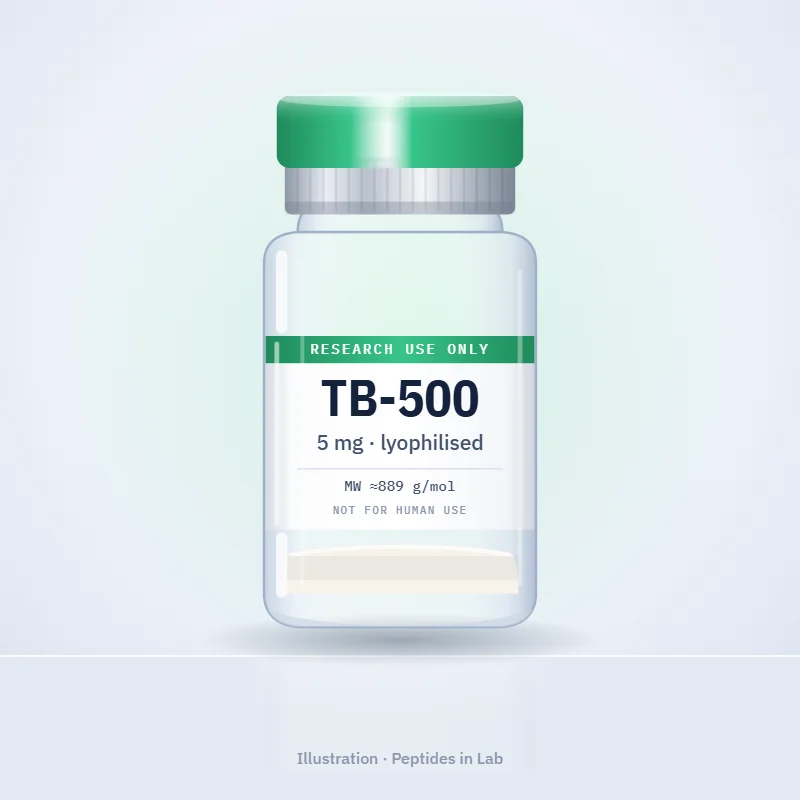
BPC-157 is a 15-amino-acid fragment of a gastric protein. TB-500 is a synthetic 7-amino-acid fragment (Ac-LKKTETQ) of thymosin β4. Both are studied in tissue-repair models, but they come from different proteins and are thought to act through different pathways. Both are banned by WADA. See our TB-500 profile or the full BPC-157 vs TB-500 comparison.
Is BPC-157 banned by WADA?
Yes. WADA names BPC-157 as a non-approved substance (class S0), prohibited at all times in and out of competition.